How to Evaluate a Unified HR Operations Platform
By IntraQ · · 6 min read
How to Evaluate a Unified HR Operations Platform
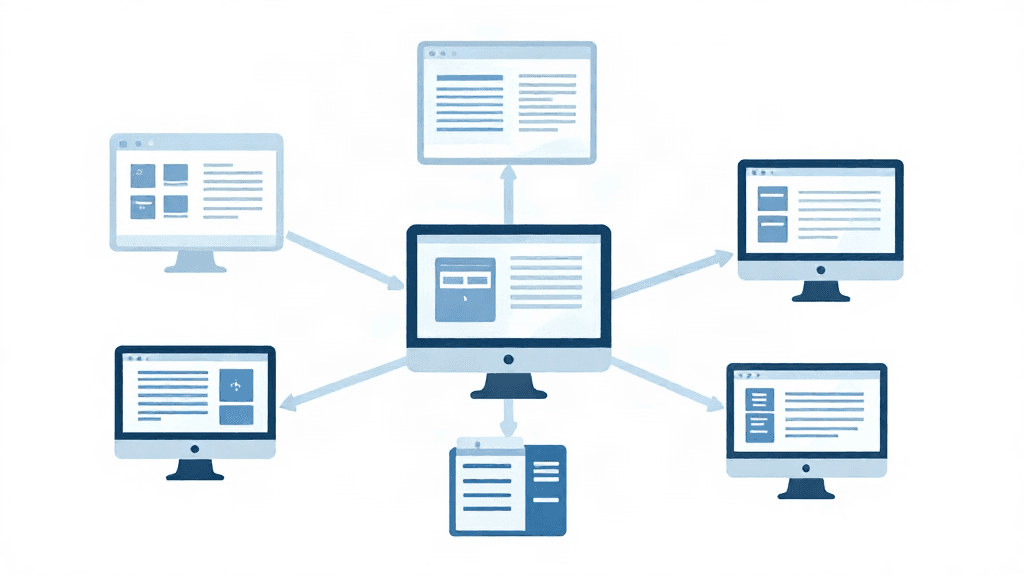
Most growing companies do not run on one HR system. They run on several.
An HRIS maintains employee records. Payroll handles wages and taxes. An ATS tracks candidates and hiring. Training platforms record completions. Benefits, documents, policies, and other systems each hold another part of the picture.
Each system may work exactly as intended. The problem is that no individual system sees the entire HR environment.
When an employee begins working in a new state, the HRIS records the location change. That does not necessarily tell anyone whether a new policy applies, whether training is now required, whether documentation is missing, or whether another part of the organization needs attention.
The data exists. The intelligence connecting it often does not.
That is the problem a unified HR operations platform should solve.
What is HR operations intelligence?
HR operations intelligence is the ability to connect signals across the HR environment, understand workforce changes in context, determine what those changes mean, and surface what requires attention.
That is different from simply centralizing data.
A connected system can tell you that something changed. An intelligent system should help determine why the change matters.
This requires four capabilities.
First, the platform needs to connect signals across systems. A workforce change should not remain isolated inside the application where it was recorded.
Second, it needs context. A new hire, location change, manager change, headcount threshold, expired training assignment, or missing acknowledgment can have consequences elsewhere in the organization.
Third, the platform needs to determine what those changes mean. What now applies? What evidence should exist? What is already satisfied? What remains uncertain?
Finally, it needs to surface what deserves human attention.
That progression from detecting a change to understanding its meaning is what separates HR operations intelligence from another system of record.
Consider a simple workforce change
Imagine two employees begin working in Illinois.
The HRIS records their new work locations. From the perspective of the HRIS, its job may be complete.
But the organization's job is not.
The location change may affect policies, training requirements, notices, documentation, or other obligations. Someone now needs to determine what applies and whether the organization has the evidence to support it.
Without an intelligence layer, those connections often depend on someone knowing to look.
With HR operations intelligence, the change itself becomes the signal.
The platform can recognize what changed, determine what now applies, check the available evidence, identify what is missing, and surface what needs attention.
The HR team does not have to discover the change twice: once when it happens and again when someone eventually realizes what it means.
What should you evaluate?
A unified HR operations platform should do more than provide integrations or put information on another dashboard.
Integration depth
Start with the systems your organization already uses.
Can the platform connect across the HR environment, or does it depend on one primary source? More importantly, can it understand relationships between information coming from different systems?
Connectivity is the foundation. Cross-system understanding is the value.
Continuous monitoring
Your workforce does not change once a quarter.
People are hired, transferred, promoted, relocated, terminated, and assigned new responsibilities continuously. Documents expire. Training becomes due. Headcount changes. Policies evolve.
An intelligence platform should be capable of recognizing meaningful changes as the environment evolves rather than waiting for someone to initiate another review.
Contextual intelligence
Detection alone is not enough.
A platform should be able to distinguish between a changed field and a change that matters.
Ask how the system determines what a workforce event means, what other information it considers, and how it handles uncertainty.
Evidence verification
Knowing that something should exist is different from knowing that it does exist.
A useful HR operations intelligence platform should connect requirements to evidence whenever possible.
If training is required, is there evidence of completion? If an acknowledgment should exist, is it actually there? If a policy applies, does the organization have the appropriate version?
This is where intelligence becomes operational.
Gap detection
Once requirements and evidence are connected, the platform should be able to identify the distance between them.
The useful question is not simply, "What are we supposed to do?"
It is, "What is true right now, what is missing, and what needs our attention?"
Source grounding
HR teams should be able to understand why a finding exists.
Important conclusions should be grounded in identifiable sources, whether those sources are internal organizational records, policies, documents, or external authorities.
The system should help humans evaluate the evidence rather than asking them to trust an unexplained answer.
Human control
Intelligence should improve human judgment, not remove it.
A platform can investigate, connect information, identify gaps, explain findings, and prepare potential actions. Decisions that affect the organization should remain with the appropriate people.
The technology does the monitoring. Humans retain authority.
How is HR operations intelligence different from an HRIS?
An HRIS is primarily a system of record.
It stores structured employee information and supports important HR processes. HR operations intelligence serves a different purpose.
It works across systems and interprets changes in relation to the broader HR environment.
The distinction can be simple:
The HRIS tells you where an employee works. HR operations intelligence helps determine what that location means for everything else.
The two are complementary.
A company should not need to replace a functioning HRIS simply to gain intelligence across its operations.
Does unifying HR operations mean replacing the HR stack?
No.
This is one of the most important distinctions when evaluating the category.
Traditional consolidation asks organizations to move more processes into one platform. HR operations intelligence takes another approach: connect the systems that already exist and create intelligence across them.
Your HRIS can remain your HRIS. Payroll can remain payroll. Your ATS, training platform, document repositories, and other specialized systems can continue doing the jobs they were designed to do.
The intelligence layer sits across that environment.
Instead of forcing every HR process into one database, it creates a connected understanding of what is happening across the organization.
Where IntraQ fits
IntraQ is an intelligence layer across the HR stack.
IntraQ is designed to connect signals across the HR environment, recognize meaningful workforce changes, determine what those changes mean, connect requirements to available evidence, and surface what needs attention.
Compliance is an important outcome of that intelligence, but it is not the entire product thesis.
The broader problem is operational visibility.
Organizations have more HR data than ever, but that information is distributed across systems that were designed to perform individual functions. The burden of understanding what everything means together still falls heavily on people.
IntraQ is being built to close that gap.
The goal is not another place for HR teams to enter information. It is an intelligence layer that helps them understand the information they already have.
The questions to ask before choosing a platform
When evaluating a unified HR operations platform, do not begin with the size of the feature list.
Begin with what the platform can understand.
Can it connect to the systems you already use? Can it recognize meaningful workforce changes? Can it determine what those changes affect? Can it connect requirements with evidence? Can it explain why something needs attention? Can it distinguish between what is known, missing, and uncertain? Can it keep humans in control of consequential decisions?
Those questions reveal something more important than whether a platform claims to be unified.
They reveal whether it actually provides intelligence across your HR operations.